

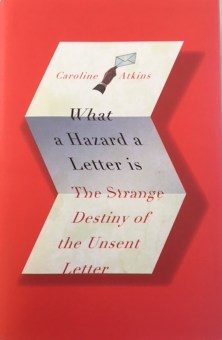
What a Hazard a Letter Is: the Strange Destiny of the Unsent Letter is now available in paperback. (‘A charming book, witty, original and wise’, Christopher Hart, Sunday Times)
I’ve been wondering about the significance of the letter during Lockdown. Should we be writing more of them? There feels a greater need to keep in touch with each other while we’re physically isolated, and to keep a record of our thoughts; on the other hand, are we exposing postal workers to extra risk by adding to their mailbags? Customers at my local post office are queuing down the street and round the corner. It’s like the run-up to Christmas, without the gaudy stamps – and without the bad temper: everyone is patient, stoical and considerately distanced. And my wonderful postman handles special deliveries by ringing the doorbell to let me know he’s there, then signing on my behalf and popping the parcel through the door for me.
Perhaps the answer is that we should at least be writing letters, putting our feelings into words, even if we don’t get round to posting them now – or ever. History and literature are strewn with letters that were left unsent, whether deliberately or by mistake – as well as those that were misdirected, or intercepted, or failed to reach their intended destination for some other reason. Some changed the course of a life by remaining unsent. Others turned out to have been withheld wisely. What a Hazard a Letter Is: The Strange Destiny of the Unsent Letter tracks their stories, complete with the reasons and the consequences…
Published by Safe Haven Books, £9.99 paperback
 This idea grew out of a chance conversation with my friend Graham Coster, publisher of Safe Haven Books. I’d been reading Janet Malcolm’s fabulous The Silent Woman, about her exploration of the relationship between Sylvia Plath and Ted Hughes, in which she describes writing a letter to a fellow biographer – and then not sending it. Her analysis of the motives that made her write, but not send, the letter is fascinating: the unsent letter, Janet Malcolm suggests, would be an interesting genre for study. In fact, Graham said to me, it would make a good book. And then he said: ‘When are you going to write it?’
 Caroline Atkins